Apple and Huawei Thrive as Smartphone Sales Plummet
A recent analysis from Counterpoint Research reveals a stark contrast between the fortunes of Apple and Huawei and the overall sagging smartphone market, which has now seen nine consecutive weeks of decline. This troubling trend raises questions about the broader economic factors at play and how consumer sentiment is shifting in the wake of various market pressures.
Apple and Huawei Show Strong Growth
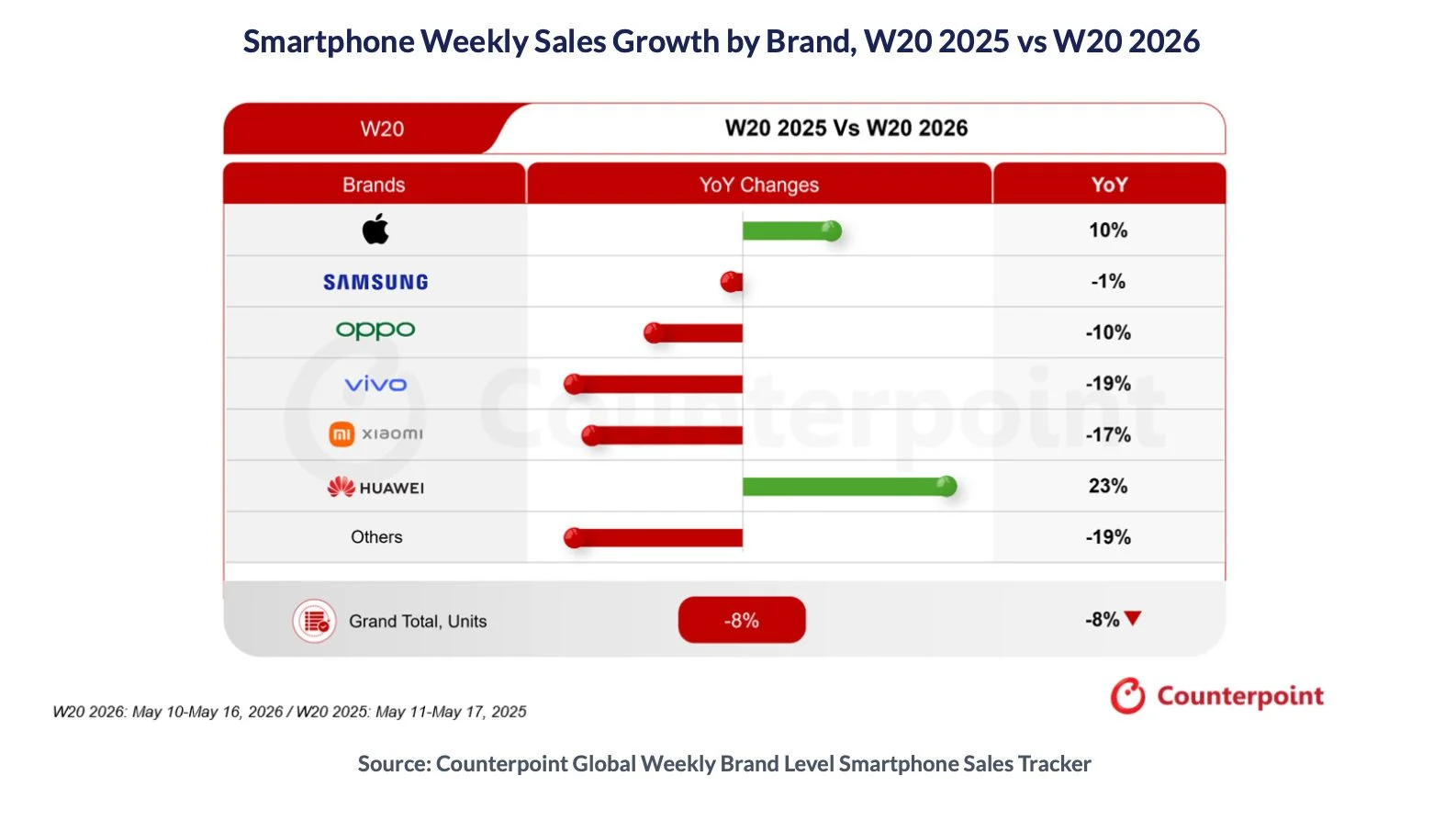
Counterpoint's data indicates that iPhone sales surged by about 10% year-over-year for the period between May 11 and May 17, 2026. This performance stands out against the backdrop of an 8% downturn in the global smartphone market. Huawei, similarly, reported a remarkable 23% increase in sales, making both companies notable exceptions in a faltering industry. The resilience of these two brands could suggest that loyal customer bases are willing to invest in high-quality devices even when economic conditions are challenging.
For Apple, the success can be attributed in part to a well-established ecosystem of products and services that create a sticky experience for users. The iPhone isn't just a phone; it's a gateway to services like Apple Music, iCloud, and the App Store. As consumers find value in this interconnected world, they're less likely to abandon the brand even in tough times. Huawei's growth, while impressive, speaks to a different dynamic. The company has been aggressively repositioning itself in markets outside of the U.S. and has made strides to reconnect with consumers who were previously put off by trade issues and security concerns. This renewed focus on markets like Europe and Asia could be paying off handsomely.
Challenges for Other Major Brands
In sharp contrast, major competitors like Samsung and Oppo have struggled, with sales dipping by 1% and 10%, respectively. Xiaomi didn't fare much better, reporting a 17% decrease, while Vivo dropped by 19%. Overall, sales among other brands plummeted by 19%, reflecting a broader trend of declining consumer demand. This raises an important point: what happens when consumers lose confidence in established brands? In many cases, they either hold onto their devices longer or switch to alternative products, and those alternatives must compete not just on features but on value.
Despite promotional pushes in markets like China and India, which aimed to stimulate sales, the initiatives fell flat. Factors like price hikes, shifting product launch strategies, and a heightened focus on cost efficiency amid a persistent memory shortage have compounded the challenges. We've seen Apple and Huawei navigate similar situations but with noticeably different outcomes. The cutting back on incentives and discounting strategies could indicate a fundamental shift in how these brands approach their consumer base.
Tarun Pathak, Research Director at Counterpoint, commented, “It is now clear that memory prices will remain high for the rest of 2026, and OEMs have adjusted their strategies accordingly.”
The Market Gap and Apple’s Pricing Strategy
The data highlights that the disparity in growth between Apple and Huawei compared to other brands can be attributed to varying levels of supply chain stability and pricing strategies. Apple’s recent announcement by CEO Tim Cook about impending price increases due to RAM shortages further complicates the situation, raising questions about whether existing products will face adjustments or whether new offerings will take the brunt of these changes. This pricing tactic could alienate budget-conscious consumers, even as loyalists might still indulge.
If you’re working in this space, keep an eye on how these price strategies unfold. Apple has successfully created an elite brand image, and such price adjustments could reinforce that perception. Yet, in the case of Huawei, any pricing changes might impact its re-emerging popularity in more price-sensitive regions. It’s a balancing act. Disruptive pricing changes may drive consumers toward different ecosystems.
And this is the part most people overlook: while premium brands can often weather storms of economic change, mid-tier brands like Xiaomi and Vivo can find themselves squeezed out entirely. Their sales drops raise red flags about their future viability, amidst fears that they may not recover swiftly.
Implications and Future Outlook
The divergence in performance among smartphone brands presents a fascinating case for analysts and consumers alike. The situation suggests that brand loyalty and an effective ecosystem can safeguard companies against broader economic downturns. Apple and Huawei are emerging as strong players, but the sustainability of their growth amid potential long-term economic pressures remains to be seen.
Moreover, the ramifications for the broader market could lead to further consolidation, where weaker brands might be absorbed or pushed out entirely. With memory prices set to remain high and production costs likely to rise, companies will need to adapt quickly. Consumers, especially those less devoted to specific brands, may start to look for value over features in their purchasing decisions. It's a pivotal moment, and there's a lot at stake.