Advancements in Spatial Omics: Insights from the Bioconductor Hackathon
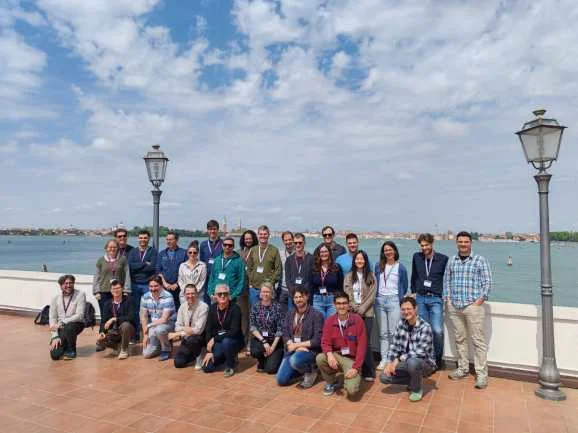
In an effort to push the boundaries of spatial omics, a recent hackathon took place between April 19-22 on San Servolo Island, near Venice, Italy. Organized by prominent members of the Bioconductor community—including Davide Risso from the University of Padua, Helena Crowell from CNAG Barcelona, and Wolfgang Huber from EMBL—the event united 27 researchers and developers from countries including Germany, Switzerland, Italy, Spain, and the United States. This collaboration signifies an ongoing commitment within the scientific community to advance the integration of spatial data within biological research.
Motivation Behind the Hackathon
The hackathon was designed not only to foster collaboration among international researchers but also to address specific challenges in spatial data processing. As the field of spatial omics—an area that seeks to map gene expression data in a tissue's three-dimensional context—grows, so does the need for sophisticated tools that can handle complicated datasets. Traditional methods often fall short when it comes to managing the vast amount of image data generated by current technologies. This event aimed to change that dynamic.
Participants were specifically selected based on their backgrounds and contributions to the themes identified for the event. This approach ensured a well-rounded mix of early-career and established researchers. It signifies a strategic move towards building a more collaborative ecosystem where newcomers can absorb insights from seasoned professionals. It’s this blend of experience and fresh perspectives that often leads to breakthroughs in scientific development.
Focus Areas and Team Dynamics
The hackathon was centered around advancing work in spatial omics and bioimaging. Key themes included data representation, interoperability, scalable handling of datasets, and interactive visualization techniques. Over the three-day event, participants organized into teams to develop solutions targeting specific challenges related to their respective expertise. The emphasis on team dynamics and collaborative problem-solving played a pivotal role in the event's success.
On the first day, teams defined their focus areas, which included:
- Spatially stratified differential expression analysis
Led by Matteo Calgaro, Robert Castelo, Patrick Danaher, and Pere Moles Serò. This work aims to refine how we analyze variations in gene expression across different tissue layers. - Image and segmentation data manipulation and visualization
Led by Riccardo Ceccaroni, Carissa Chen, Davide Risso, and Mike Smith. Their efforts focus on making complex visual data more understandable and easier to manipulate, critical for effective analyses in the field. - Infrastructure and interoperability of spatial data in Bioconductor
Guided by Helena Crowell, Martin Emons, and others. This team is tackling the backbone of data management to ensure that diverse datasets can communicate effectively. - Facilitating the use of foundation models within the Bioconductor community
Including contributions from Ilaria Billato, Juan Henao, and Wolfgang Huber. This area examines how machine learning frameworks can enhance spatial omics research.
Each day kicked off with sessions for teams to outline their goals. A quick project presentation after lunch on Day 1 helped them crystallize their ideas, with the understanding that they could evolve over the course of the event. Afternoon presentations allowed teams to discuss progress and obstacles, fostering a collaborative atmosphere. This is not just a conference; it embodies the changing nature of scientific cooperation.
Showcase and Documentation
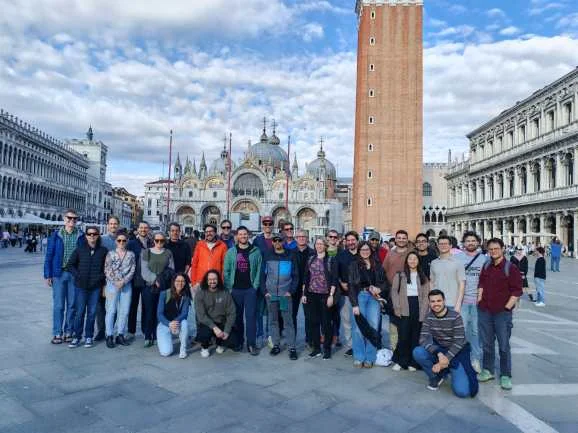
The hackathon culminated in a closing showcase where teams highlighted their achievements and shared insights into their work. Demonstrating the importance of transparency, participants documented their projects—including code and resources—in a dedicated GitHub repository. This commitment to open-source principles allows the wider scientific community to benefit from their work. By promoting accessibility, they’re ensuring that their efforts continue to resonate beyond the hackathon.
- Access the GitHub repository for resources developed during the event.
- View the collaborative preprint detailing the event's themes and outputs.
Implications and Future Outlook
The convergence of expertise showcased at this hackathon extends beyond immediate project goals. The implications of their work have the potential to shift how researchers engage with spatial omics on a broader scale. By developing tools aimed at improving data handling and visualization, the findings from this event may set a new standard in bioinformatics and biotechnology.
As research continues to explore the intricate relationships within multi-dimensional biological data, the ability to parse and interpret such complexities will only become more critical. If you're working in this space, this increased emphasis on collaboration and shared resources is something to keep an eye on. It opens doors for cross-disciplinary partnerships that were increasingly necessary as the boundaries of biological research expand.
The Department of Statistical Sciences at the University of Padova coordinated this initiative alongside EMBL and the Venice International University, securing funding support from the European Research Council (ERC) Grant CoG 101171662.
© 2026 Bioconductor. Licensed under Creative Commons CC-BY-4.0 License for text and BSD 3-Clause License for code.