Ensuring Bioconductor Maintainer Compliance with New Email Verification System
Overview
Bioconductor, a popular open-source platform for biological computation, is heavily reliant on its community of maintainers for the development and upkeep of its extensive range of packages. The recent move towards an email verification system highlights Bioconductor's commitment to ensuring that these maintainers are not only engaged but also readily accessible. As maintainers transition roles—due to career shifts, retirements, or new commitments—their contact information may go stale. This hinders effective communication, which is essential for collaborative projects.
To combat these issues, Bioconductor has introduced an email verification system. This system employs Amazon Simple Email Service (SES), known for its reliability and scalability in handling emails, to periodically check whether maintainer emails are active and responsive. Each year, maintainers receive reminders that include critical updates about Bioconductor's evolving policies, procedures, and guidelines for maintaining a respectful, productive community environment.
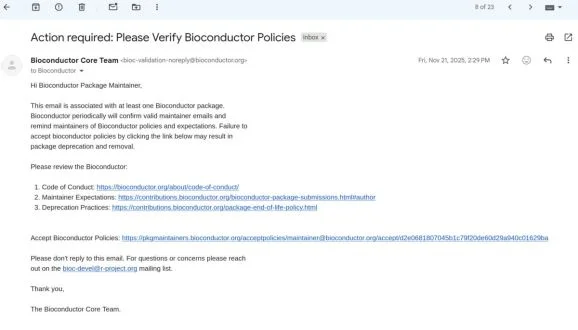
Initial feedback on this initiative has highlighted a persistent concern: some maintainers feel these messages may come off as "spammy." There's the additional risk that institutional email filters could inadvertently block them. Such a response would undermine the intention behind this initiative. Nonetheless, implementing this verification step is a significant stride toward enhancing accountability within the Bioconductor community—something that demands attention in today's collaborative environments. Alternatives, such as a platform that provides dedicated access for maintainers, are under consideration, which may offer a more targeted communication method.
The Importance of Maintainers
Maintainership in open-source projects often carries considerable weight. These individuals act not only as technical overseers of their respective packages but also serve as community liaisons. The quality and reliability of software, especially in complex fields like bioinformatics, heavily depend on maintainers' availability for updates and troubleshooting. Their responsiveness impacts user experience directly; when maintainers are reachable, users are more likely to seek help, contribute to the project, and remain engaged.
In similar frameworks, such as CRAN (the Comprehensive R Archive Network), the role of maintainers has been increasingly recognized as foundational. Projects that fail to attract or retain active maintainers often see a decline in user trust and a subsequent reduction in community participation. This encourages a vicious cycle that can ultimately harm the availability of resources needed for scientific innovation.
If you're working in this space, understanding the dynamics between maintainers and the community could inform how you engage with tools and resources. Fostering proactive communication strategies, such as the verification system Bioconductor has implemented, could very well be a best practice that translates to better software delivery across the board.
Information Accessibility
Maintainers' information is stored in a publicly accessible database, which plays a crucial role in transparency. The commitment to open access highlights Bioconductor's intent to promote a collaborative atmosphere. While direct web service connections to this database aren't actively encouraged, the community can still engage through the BiocMaintainerApp R package. This Shiny application offers an intuitive interface for querying details about package maintainers, making information available at users' fingertips.
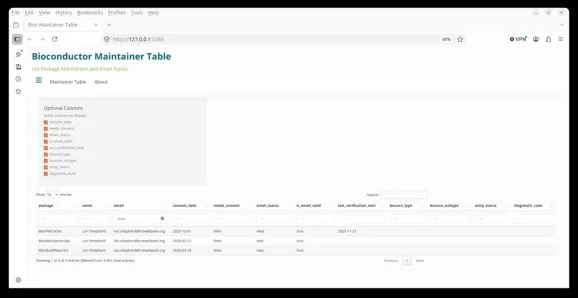
This Shiny application not only helps users connect with maintainers but may also serve as a reference point for compliance checks. Users can verify who is responsible for which package, making accountability more manageable. That said, it's essential for maintainers to keep their information current to avoid confusion or miscommunication about package ownership. In the broader context of software development, maintaining such transparency can significantly enhance user trust, encouraging more developers to contribute.
Acknowledgments
We appreciate the cooperation of maintainers in these initiatives, supporting a more engaged Bioconductor community. The success of the email verification system hinges not just on technology, but on the willingness of maintainers to participate actively. Their engagement can foster a stronger, more responsive framework for collaboration.
Future Implications and Significance
The implications of Bioconductor's new verification system extend beyond mere compliance. They could redefine how collaborative projects manage accountability and accessibility. As more communities look to models like this implementation, they might start assessing their own communication strategies in light of the feedback received by Bioconductor maintainers.
This is more significant than it looks. A well-maintained communication pipeline fosters user loyalty and heightened engagement rates. If users feel they can reliably reach maintainers, they're more likely to contribute back by reporting bugs, submitting features, or even enhancing documentation.
Now, consider this: What happens if these strategies don't yield their desired results? If communication continues to falter, it might disincentivize new users and contributors, leading to stagnation within the project. The exploration of alternative communication methods is not just a backup plan; it's essential for ensuring the project's longevity.
In sum, as Bioconductor navigates the challenges of open-source collaboration, the insights gathered from these initial feedback loops could inform broader efforts in software governance and community engagement. This could lead to richer interactions and enhanced resources for future developers.